
Services
Test Services
Testing both validates the design and confirms manufacturing processes
Developing a product testing, verification and validation strategy is an important part of the design process and readying a product for manufacturing. Testing confirms the design and identifies areas for improvement before weaknesses are revealed in the field. Executing a robust test plan will guide design toward increased reliability and designing a robust product.
At Zebulon Solutions, we incorporate validation testing into every design cycle. It closes the feedback loop between your product and your requirements. Whether we are developing test protocols, executing tests in-house or managing 3rd party labs, we will have a full suite of testing services to ensure your product meets its requirements.
It is just as important to have a product tested in manufacturing to ensure the quality of the product before shipment. Zebulon Solutions will design, build, and qualify your test stations to support production at your contract manufacturer.
Product Test
From design validation testing to life testing, we support every test need your hardware has. We will help you make sure your design aligns with all your requirements ranging from regulatory to performance and life testing.
Test Stations
Preventing defects from escaping to your customers protects your brand. Don't overlook developing your test stations before releasing your product to manufacturing.
The formula for success
Innovation. Experience. Integrity.
Ensuring your product meets the requirements during design, production and beyon.
Plan
We turn product requirements into detailed test plans and custom test systems to ensure your product performs as designed.
Design
Whether creating a test setup for engineering verification or a production test system, we ensure our test platforms meet your product's requirements.
Validation
We use the test plan to rigorously evalaute designs and ensure manufactured products fully meet specifications through custom test systems.
Product Test
Verification Testing
This is where the designers verify the product against the requirements. We anticipate the product will fail during this stage. These tests are intended to provide data that will guide design iterations.
Typically, these parts are prototypes and engineering modified components for testing.
- Engineering Verification Test (EVT)
- Test station mock-ups
- Performance requirements
- Corner cases
- Function at high and low temperatures
- Function at power droops
- Functions under all operating conditions
- Functions as defined in requirements
Validation Testing
- Design Validation Test (DVT)
- Drop testing
- Moisture ingress testing
- Temperature and humidity testing
- Customized test plans
Regulatory Pre-Testing
For products that must pass certification or regulatory testing, we replicate testing conditions to verify the product will pass before making the regulatory investment.
The parts we use for testing are from production processes and tooling.
- FCC/CE EMI pre-scans
- Equipment stability
- Acoustical sound measurement
- Temperature cycling and thermal testing
- Water and particulate ingress
- Mechanical hazards
- Patient and operator isolation and shock protection
- Electrical performance and leakage currents
This is not an exhaustive list, but representational of some of the testing we support and perform.
Life Testing
When a product needs to survive under adverse conditions or for an extended time, it is important to verify the product will perform as expected. We translate how many cycles of a specific condition is required by calculation of that condition over the life of the product.
The parts used for testing are from stabilized produciton processes and tooling.
- Accelerated testing
- Temperature cycling
- Heat and humidity testing
- Custom test stands for wear out
Production Test Stations
Test Strategy
There are many aspects of the product that need to be considered when developing a strategy. Some of the inputs we use to guide the process are listed below:
- Utilizing verification testing to identify what needs to be done on an on-going basis vs. validation testing
- Failure modes and yields from validation testing for manufacturing test
- The design of the product for testability
- Access to test points
- Functionality of the sub-systems and sub-assemblies
- Detection capabilities of sampling plans
- Cost of 100% testing
- What compromises are appropriate for the class of product (example: consumer vs. medical device)
Test Plan
Once a strategy is developed, we create a specific test manufacturing test plan to evaluate the cost and schedule for developing a manufacturing tester. Some of the items we consider in creating a comprehensive test plan:
- The parameters and functionality that needs to be tested
- The accuracy, precision, and repeatability needed
- Test time is estimated for product cost and shift capacity
- Use of off-the-shelf equipment vs. full customization
- Use of fixtures and operator interface
- Data collection and defect sequestration
- Estimate development time and costs
Tester Design & Development
Designing a test station is as complex as developing a product. It requires its own development schedule, budget, and must happen in parallel with designing the product it will test.
- Tester requirements documentation
- Test protocol development
- Burn-in duration calculation
- Fixture design
- Software creation
- Component purchasing
- Tester assembly
- Functional verification
Depending on the product’s volume, an investment in automation is evaluated.
Tester Qualification
Ensuring your testing provides accurate and repeatable results is critical to your business. Too many failures and yields are costly. While not capturing defects before shipment exposes your brand to risk. Partnering with a company who knows how to qualify your test station is paramount to your success.
- Gage R&R
- Golden part
- Calibration
Our Works
Partnering with a company that knows how to test the product and develop the test station can reduce your development time and costs.

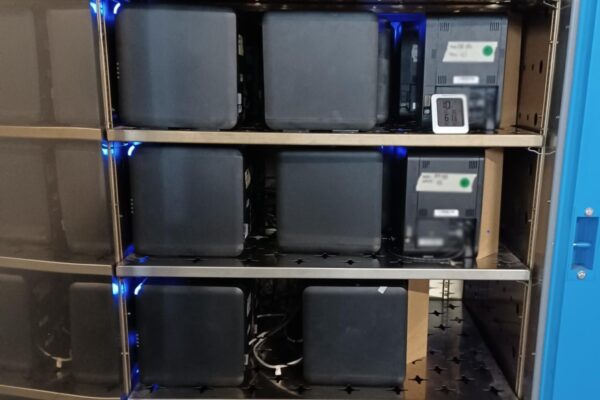
Life Testing
Life testing to ensure the fleet will survive through generational change. Each failure is a statistical calculation on the age of the fleet.
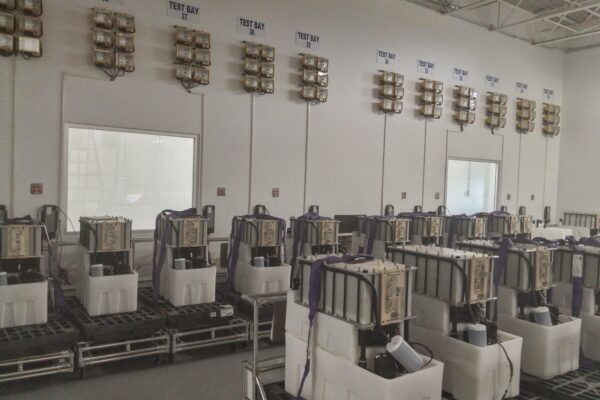
Burn-in
A burn-in test station to ensure charge and discharge cycles are as expected. The lights on the wall above were indicators of power output from the batteries during the discharge cycle.
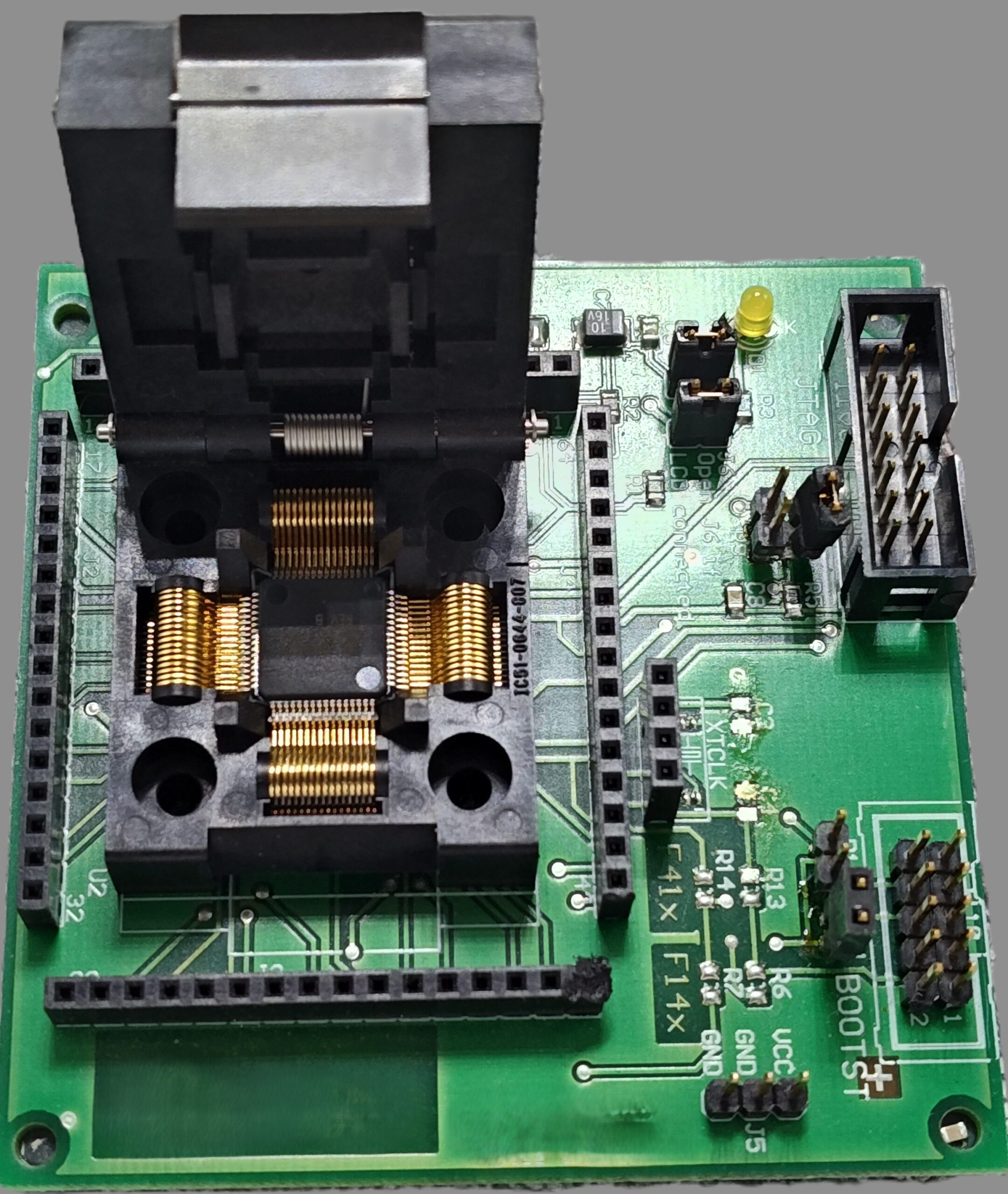
Verification Testing
Woven into our design progress is testing to ensure the design meets all of the necessary requirements prior to release to production. We create our own test fixtures or leverage existing tools to evaluate product.
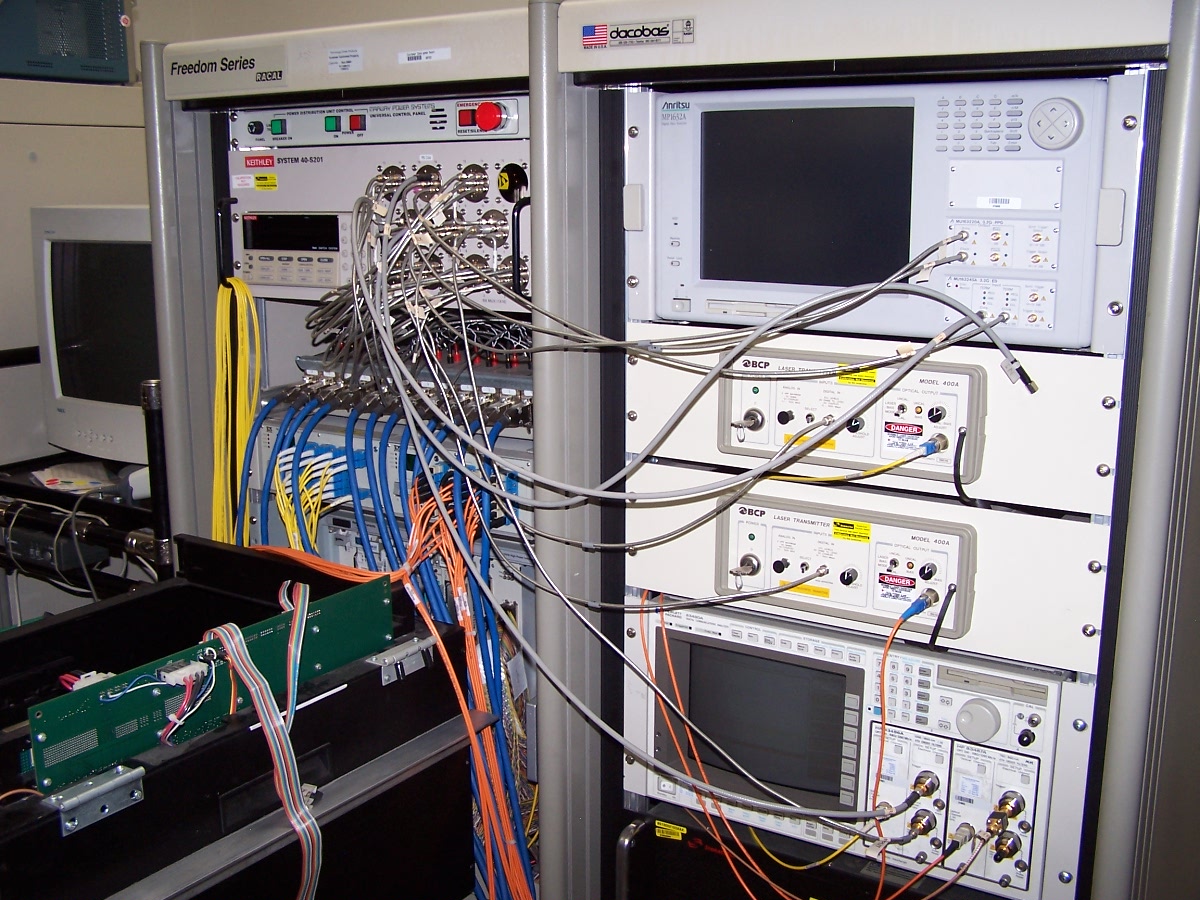
Parametric Testing
Test stations to measure function parameters to ensure manufacturing defects are detected. A clear "pass" and "fail" output to facilitate the operator segregating bad product from good.